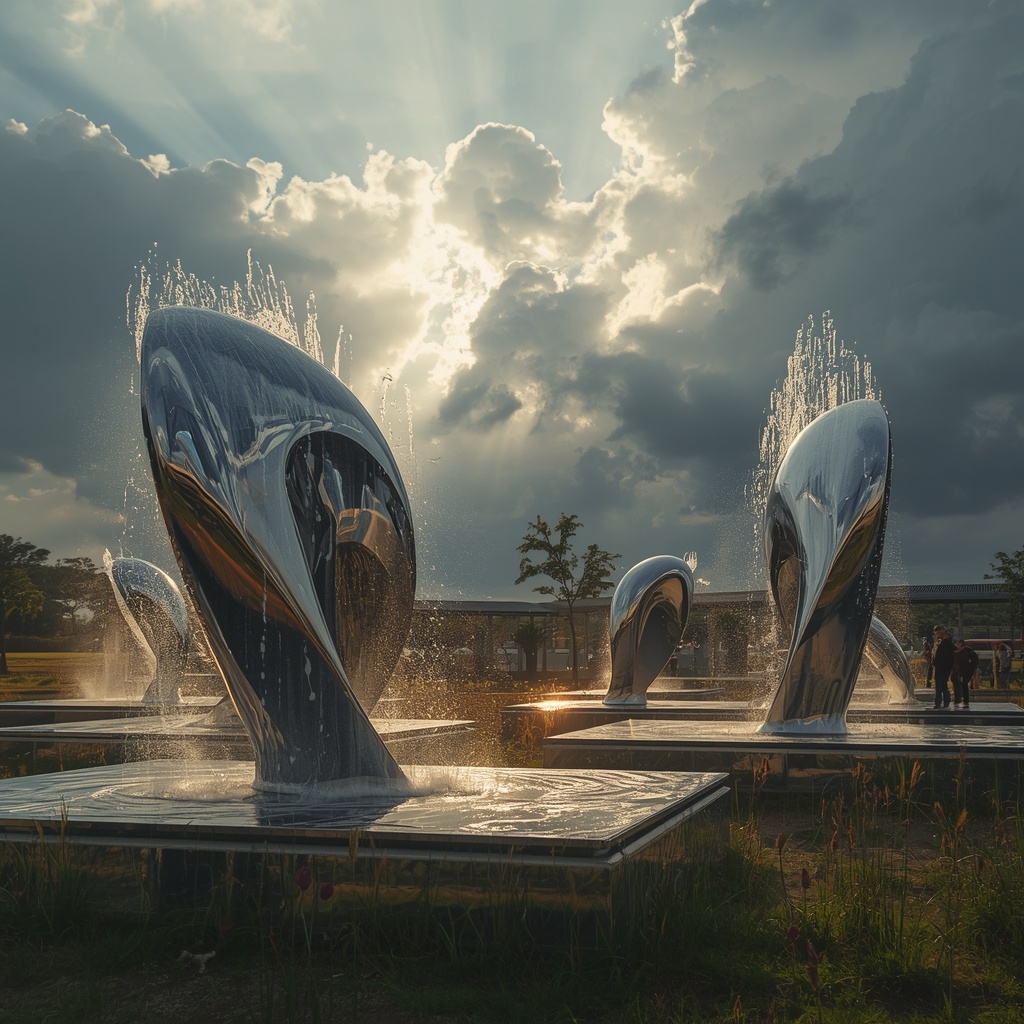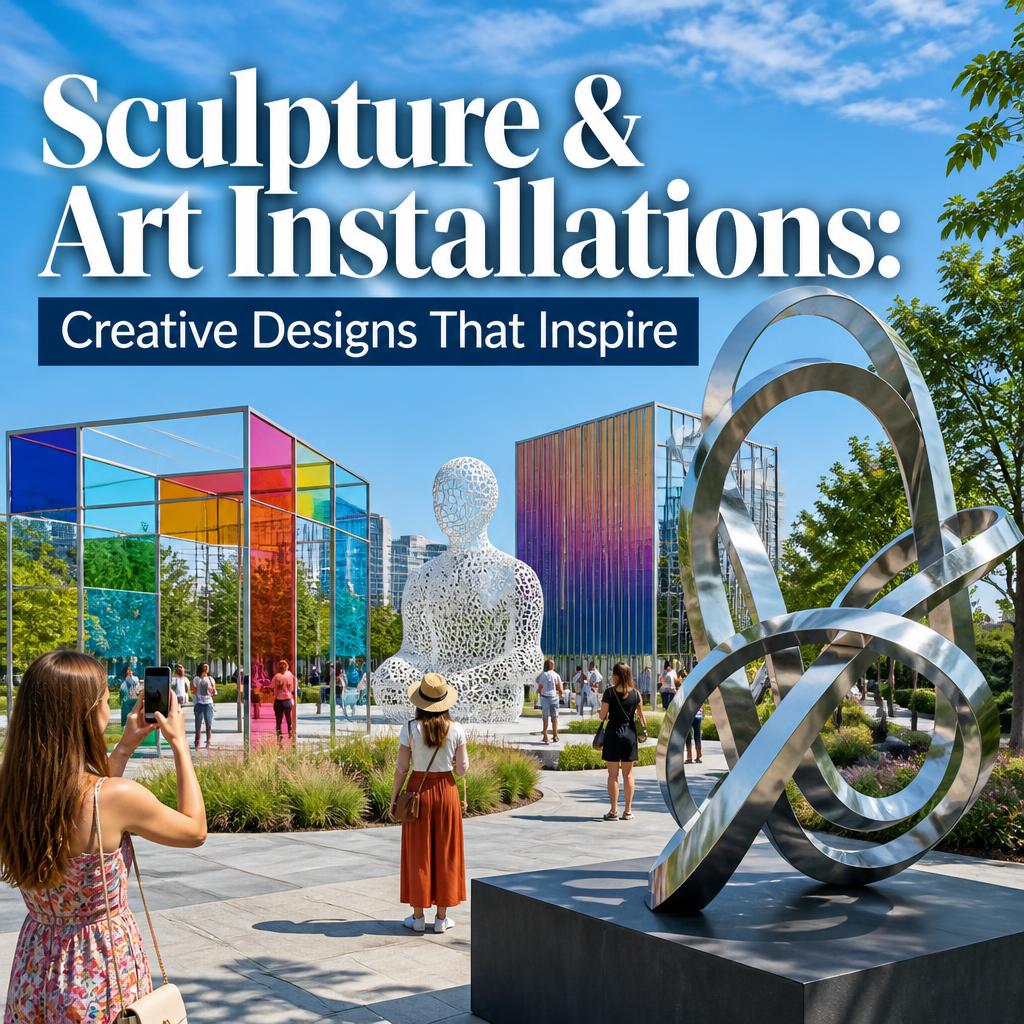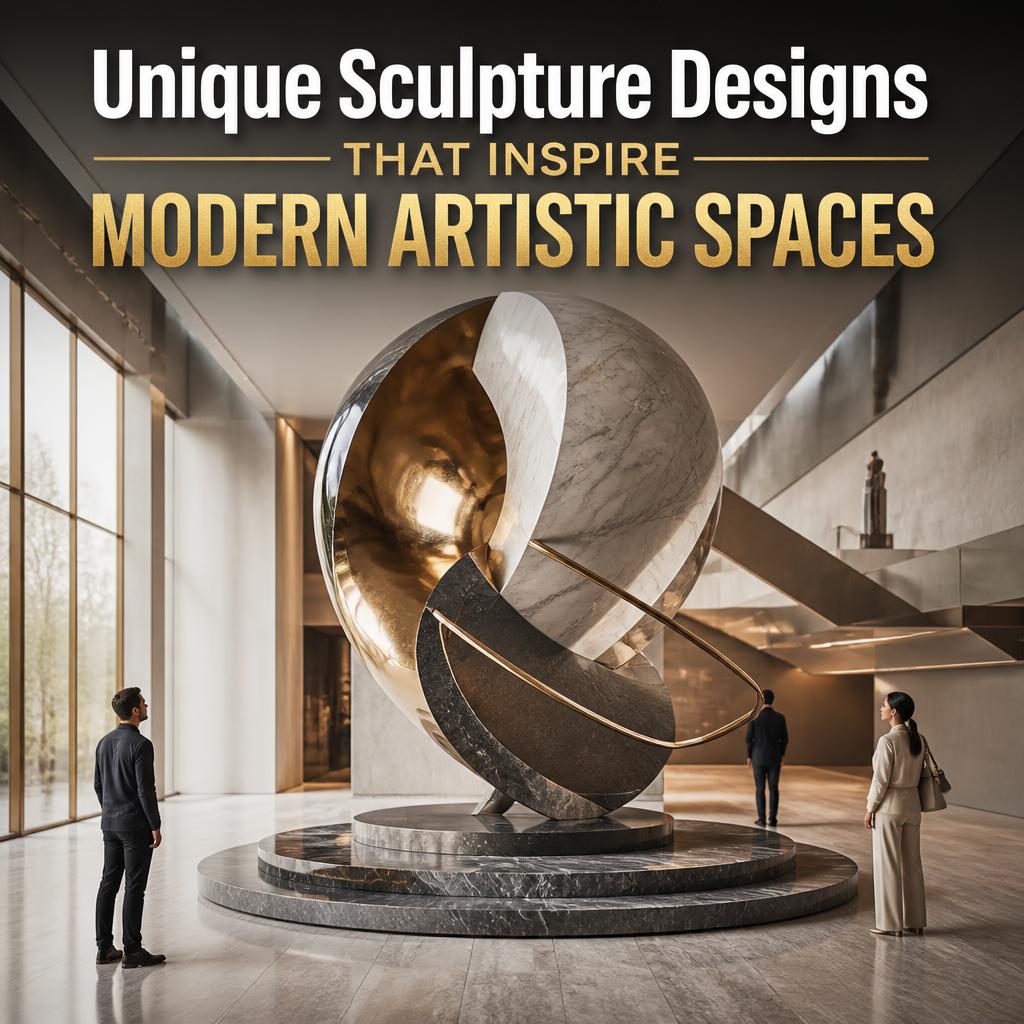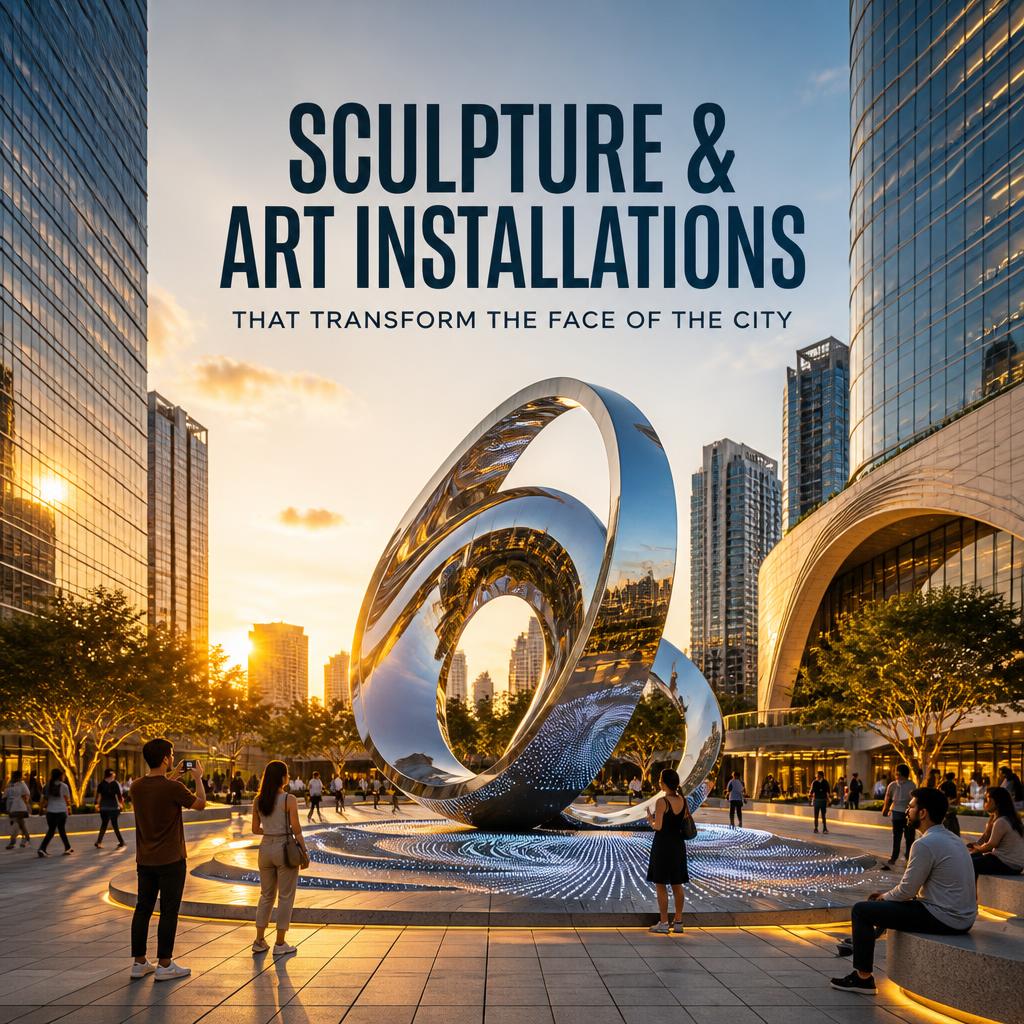
statue-duodesign.com – Sculpture & Art Installations That Transform the Face of the City are no longer just decorative objects placed in plazas, parks, or outside museums. Across modern urban environments, public art has become part of how a city communicates its personality, remembers its history, activates neglected spaces, and gives residents something meaningful to interact with.
Walk through almost any creative district today and you may encounter a monumental steel sculpture, an illuminated installation beneath a bridge, or an interactive artwork that responds to movement. These pieces change more than the visual landscape. They can influence how people move through a neighborhood, where they gather, what they photograph, and even how they remember a particular place.
Public Art Is Becoming Part of Modern City Identity
Cities constantly evolve. Buildings rise, transportation systems expand, neighborhoods change, and new public spaces emerge. Yet architecture alone does not always create emotional attachment.
That is where urban sculpture and public art installations become important.
A distinctive artwork can act almost like a visual signature. Instead of seeing another ordinary intersection or empty square, residents encounter something recognizable.
Over time, people may stop describing a meeting point by its street address. They simply say, “Meet me near the sculpture.”
That small behavioral change shows how deeply public artwork can become integrated into everyday urban life.
What Makes Sculpture Transform an Urban Space?
Not every large object automatically improves a city.
Successful public sculpture usually establishes a meaningful relationship between scale, location, people, architecture, and local context. The artwork needs to make sense within the environment while still having enough personality to attract attention.
Scale Changes the Way People Experience Art
Inside a gallery, visitors normally approach artwork intentionally. Public sculpture works differently because the artwork enters people’s normal routines.
Someone may notice it while walking to work, cycling through a park, waiting for a bus, or meeting friends.
Large-scale installations create what designers sometimes describe as spatial presence. Their dimensions influence how people perceive the surrounding environment.
A towering structure can make an open plaza feel dramatic. Meanwhile, a smaller installation positioned beside a pedestrian path may create a quieter and more personal encounter.
Location Can Be as Important as the Artwork
Placement often determines whether an installation becomes memorable.
An impressive sculpture hidden in an unsuitable corner may receive little attention. On the other hand, a thoughtfully positioned piece can completely redefine an overlooked space.
Urban planners therefore consider pedestrian circulation, viewing angles, sunlight, surrounding buildings, accessibility, and traffic patterns when selecting locations.
The best placement allows people to discover the artwork naturally rather than forcing interaction.
From Empty Corners to Creative Urban Landmarks
One fascinating role of public art involves transforming spaces that previously had little identity.
Think about an unused plaza between office buildings. Without seating, vegetation, or visual interest, most pedestrians simply cross it.
Now imagine a large contemporary sculpture standing at its center.
Suddenly, the same plaza has a focal point.
Add benches, landscaping, and lighting, and people may begin spending time there instead of merely passing through.
Art Can Encourage People to Slow Down
Modern cities often prioritize movement. People commute, shop, work, and move quickly between destinations.
Public installations introduce moments of interruption.
A strange shape, reflective surface, kinetic mechanism, or colorful structure makes pedestrians curious. They stop. They look closer. Some take photographs, while others discuss what the artwork might mean.
That moment matters because it turns an ordinary route into an experience.
Small Interactions Build Stronger Place Memories
Urban psychology frequently explores place attachment, the emotional relationship people develop with particular environments.
Memorable visual elements can strengthen that relationship.
Someone might forget the exact design of ten similar office buildings but remember the enormous red sculpture beside them. Another person might associate an illuminated riverside installation with evening walks during a particular period of life.
Art gives memory something tangible to hold onto.
Who Creates Large-Scale Public Art Installations?
Although an artist may provide the creative vision, major installations rarely come from one person working alone.
Public projects often require collaboration between sculptors, architects, structural engineers, landscape designers, fabricators, lighting specialists, urban planners, government agencies, and community representatives.
Why involve so many people?
Because outdoor artwork faces conditions that gallery pieces rarely encounter.
Wind, rain, snow, heat, pollution, vibration, vandalism, and constant human contact can affect the structure. Engineers therefore calculate structural integrity, load distribution, foundations, and material behavior before construction begins.
Material Selection Shapes Both Style and Durability
Public sculptures use an enormous variety of materials.
Common options include stainless steel, bronze, aluminum, concrete, stone, timber, glass, and weather-resistant composites.
Artists may also experiment with Corten steel, a material that develops a controlled oxidation layer. Its naturally weathered appearance can give contemporary installations a rugged industrial character.
Material choice influences far more than appearance. It affects maintenance requirements, longevity, weight, fabrication techniques, and environmental performance.
Interactive Art Changes the Role of the Audience
Traditional monuments generally encourage observation. Interactive installations invite participation.
This shift has become one of the most exciting developments in contemporary public art.
Sensors, projections, sound systems, LEDs, cameras, and responsive software allow installations to react to their surroundings.
Technology Turns Public Space Into an Experience
Imagine walking beneath an installation where lights respond to your movement.
Another project might generate sound according to wind speed. Elsewhere, digital projections could change based on pedestrian activity.
These installations combine artistic expression with human-computer interaction, environmental data, and digital technology.
The audience is no longer simply watching.
People become part of the artwork itself.
Why Interactive Installations Attract Crowds
Participation creates curiosity.
When pedestrians notice other people interacting with something unusual, they naturally want to understand what is happening. This social effect can quickly turn an installation into a gathering point.
It also makes public art accessible to audiences who might rarely visit traditional galleries.
Children can play around it. Tourists can photograph it. Residents can encounter it during normal daily activities.
Art becomes part of ordinary life rather than a separate cultural activity.
Public Sculpture Can Tell the Story of a Community
Urban artwork does not always need futuristic technology or monumental dimensions.
Sometimes its strongest quality comes from storytelling.
Artists may draw inspiration from local industries, migration, indigenous traditions, historical events, natural landscapes, or community experiences.
When those ideas appear in public spaces, artwork can create conversations between past and present.
Modern Monuments Are Becoming More Diverse
Traditional monuments often celebrated political leaders, military victories, or nationally significant figures.
Contemporary public art has expanded that vocabulary.
Modern installations can explore environmental change, cultural identity, social relationships, technological development, or everyday community life.
This broader approach allows more stories to become visible within the urban landscape.
How Art Installations Support Neighborhood Revitalization
Public art can also contribute to urban regeneration.
Older industrial districts, abandoned waterfronts, underused pedestrian corridors, and neglected plazas often need more than physical renovation. They need a new identity.
Creative installations can help establish that identity.
A neighborhood once associated with warehouses might gradually become known for galleries, murals, sculpture gardens, independent businesses, and cultural events.
Creative Spaces Can Generate New Foot Traffic
When people discover visually interesting neighborhoods, they tend to explore.
They walk around, take photographs, visit cafés, attend exhibitions, and share their experiences online.
This additional pedestrian activity can benefit surrounding businesses.
However, successful revitalization requires balance. Cultural development should involve local communities rather than treating existing residents as background scenery for a new commercial district.
When Does Public Art Become a City Landmark?
There is no exact timetable.
Some installations become recognizable almost immediately because of their unusual design or prominent location. Others gradually gain cultural significance as generations of residents interact with them.
A landmark usually develops when three things come together:
visual distinction, public familiarity, and emotional connection.
Repeated exposure matters. People pass the sculpture every morning, celebrate festivals nearby, meet friends beside it, or photograph it during different seasons.
Eventually, the artwork becomes inseparable from the location.
Why Social Media Has Changed Urban Art Design
Photography now plays a major role in how public installations circulate beyond their physical location.
A sculpture that photographs well can appear thousands of times across social platforms.
People experiment with angles, reflections, shadows, and perspectives. The artwork becomes a visual backdrop for personal stories.
This does not mean public art should exist purely for photographs. However, designers increasingly understand that visual shareability can amplify an installation’s cultural reach.
One visitor sees the artwork physically. Hundreds more may encounter it digitally.
Lighting Gives Sculptures a Second Personality
An installation can look completely different after sunset.
During daylight, people notice material, texture, geometry, and scale. At night, carefully designed illumination emphasizes silhouettes, shadows, transparency, and surrounding architecture.
Light Can Become the Artistic Medium
Some contemporary installations go further by using illumination as the primary material.
Programmable LEDs can produce changing patterns, while projections can transform walls and structures without permanently altering them.
Artists sometimes use chromatic variation to create different moods throughout the evening.
Good Lighting Must Respect the Surroundings
More brightness does not automatically create better public art.
Designers must consider glare, nearby homes, wildlife, energy consumption, traffic visibility, and existing architectural lighting.
Thoughtful illumination enhances the environment without overwhelming it.
Sustainability Is Changing Public Art
Environmental considerations increasingly influence urban design, and public artwork is part of that conversation.
Artists and planners are exploring recycled materials, renewable energy, low-energy lighting, modular construction, and locally sourced components.
Some installations even interact directly with natural systems.
Solar-powered sculptures can generate their own electricity. Rainwater installations can visualize precipitation patterns. Other works incorporate vegetation and biophilic design, connecting artistic structures with living landscapes.
Temporary Installations Offer Another Sustainable Approach
Not every project needs to remain permanently.
Temporary artworks can activate spaces for several weeks or months before moving elsewhere or being dismantled.
This approach allows cities to experiment with ideas without committing to permanent structural changes.
It also keeps public spaces dynamic. Residents can repeatedly discover something new in familiar surroundings.
How Cities Can Create Better Public Art
Strong projects usually begin with context rather than spectacle.
Before commissioning an installation, planners should ask several practical questions: Who uses this space? What story belongs here? Where will people encounter the artwork? When is the area busiest? Why does this location need intervention? How should visitors interact with the finished piece?
These questions represent the who, what, where, when, why, and how behind effective public art.
Community consultation can also reveal perspectives that designers might otherwise miss.
Residents understand how a neighborhood functions throughout the day. Their knowledge can help identify meaningful themes, practical concerns, and overlooked opportunities.
The Future of Sculpture in Smart Cities
As cities become increasingly connected, the boundaries between sculpture, architecture, technology, and infrastructure will probably continue to blur.
Future installations may use environmental sensors, augmented reality, artificial intelligence, responsive lighting, or real-time data.
Imagine a sculpture whose appearance changes according to air quality. Another might visualize public transportation activity through moving lights. A waterfront structure could respond to tides, temperature, or wind.
Technology offers enormous creative possibilities.
Still, technology alone cannot make an installation meaningful.
The most memorable projects will remain those that create a genuine relationship between people and place.
Public Art Makes Cities Feel Human
Cities need roads, homes, offices, utilities, and transportation networks. Those systems make urban life possible, but functionality alone does not create character.
Art introduces imagination into that infrastructure.
A sculpture can turn an anonymous intersection into a recognizable landmark. An interactive installation can bring strangers together. A community artwork can preserve local stories. Meanwhile, an illuminated structure can make an ordinary evening walk feel completely different.
That is the real strength of Sculpture & Art Installations That Transform the Face of the City. They do not simply fill empty spaces. At their best, they reshape how people see, experience, remember, and connect with the places they call home.