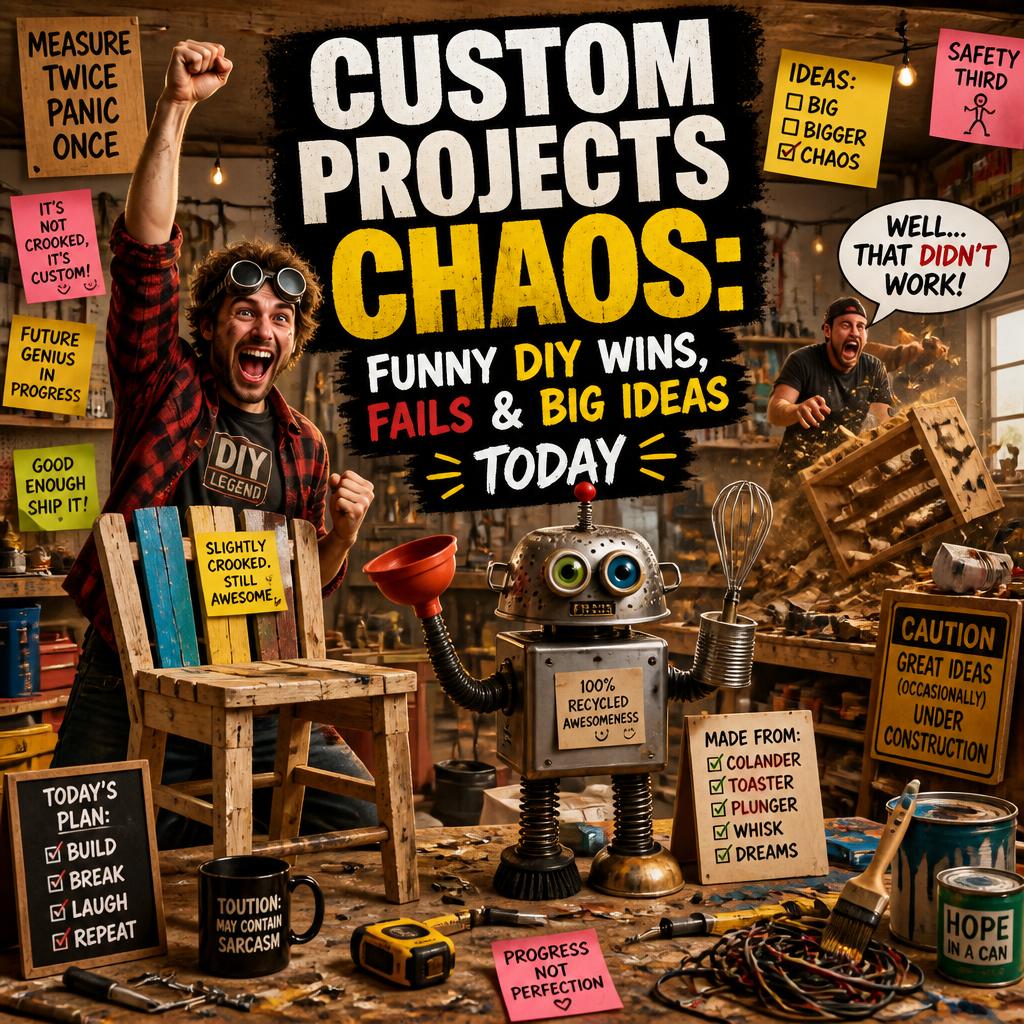
Custom Projects Chaos: Funny DIY Wins, Fails & Big Ideas Today
statue-duodesign – Custom Projects Chaos: Funny DIY Wins, Fails & Big Ideas Today is a playful yet insightful look into how personalized creation work shapes modern digital and physical problem-solving. From quirky home DIY attempts to complex engineering builds, custom projects have become a global trend where creativity meets functionality in unexpected ways.
People are no longer satisfied with one-size-fits-all solutions. Instead, they want something tailored, something unique, and sometimes—something hilariously imperfect. That’s where custom projects step in.
What Are Custom Projects in Modern Context?
Custom projects refer to tailor-made tasks, builds, or systems designed to meet specific user needs. They can be software-based, physical, or even hybrid systems combining both.
Who Typically Works on Them?
Custom projects are handled by:
- Freelance developers and designers
- Engineers and architects
- Hobbyists and DIY creators
- Businesses seeking unique solutions
Where Do They Appear Most?
You’ll find them in:
- Tech startups
- Home improvement communities
- Education and research labs
- Creative industries like gaming and media
Why Custom Projects Matter More Than Ever
The modern world is driven by personalization. People don’t just want tools—they want tools that feel like they were made just for them.
Custom projects solve problems like:
- Lack of flexibility in mass-produced tools
- Unique business requirements
- Creative expression needs
- Efficiency optimization in workflows
They blend innovation theory with real-world practicality, making them both scientific and artistic at the same time.
When Should You Start a Custom Project?
Timing plays a huge role. A custom project is usually started when:
- Off-the-shelf solutions fail
- A business needs scaling flexibility
- A personal idea becomes too specific to ignore
- Existing systems become outdated or inefficient
In many cases, people only realize they need a custom solution after they’ve already tried three “standard” ones that didn’t work.
How Custom Projects Actually Work (Behind the Scenes)
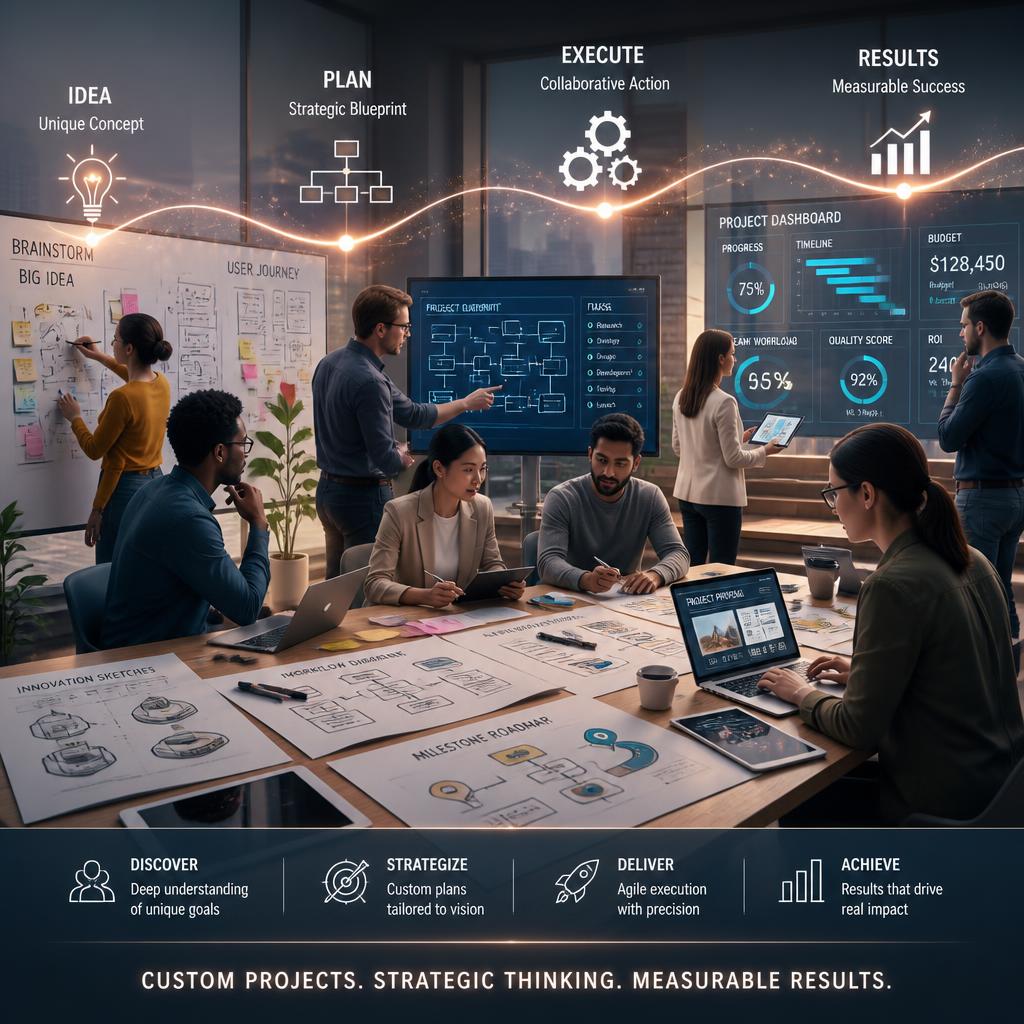
The process usually follows a structured lifecycle:
1. Ideation Phase
This is where brainstorming happens. No limits, no rules—just raw ideas.
2. Planning & Feasibility Study
Here, developers or creators analyze whether the idea can actually be built using current resources.
3. Prototyping
A basic version is built to test functionality.
4. Iteration & Optimization
Feedback loops begin, improving performance step by step.
5. Final Deployment
The project is launched or implemented into real use.
At around this stage, many creators realize how unpredictable things can get. Funny bugs, unexpected results, and creative detours often become part of the journey.
Types of Custom Projects You’ll Encounter
Digital Custom Projects
These include:
- Mobile apps
- Websites
- AI tools
- Automation systems
Physical Custom Projects
Examples include:
- Furniture builds
- Mechanical gadgets
- Home renovations
- Custom vehicles
Hybrid Projects
These combine both worlds, such as:
- Smart home systems
- IoT-based devices
- Interactive installations
Tools, Tech, and Methodologies Used
Modern custom projects rely on a mix of scientific and technical tools like:
- Agile methodology for project management
- Machine learning algorithms for smart systems
- CAD software for design modeling
- Cloud computing platforms for scalability
These tools help bridge imagination with real-world execution.
Real Challenges and Funny Fail Moments
Not every custom project goes smoothly. In fact, many creators experience:
- Code that works “almost” correctly
- Physical builds that collapse unexpectedly
- Features that behave in completely unintended ways
But ironically, these mistakes often lead to better innovations. Many breakthroughs started from failed experiments that “accidentally” worked differently.
Mid-Project Spotlight (Important Insight)
In many creative industries, Custom Projects often become the backbone of innovation pipelines, especially when companies need solutions that standard products simply cannot provide. This is where experimentation meets real-world demand, creating outcomes that are both functional and surprisingly original.
Step-by-Step Strategy for Better Results
To improve outcomes, creators often follow:
- Define a clear objective
- Break the problem into smaller tasks
- Test early and often
- Collect user feedback continuously
- Refine based on real data
This structured approach reduces chaos while still allowing creative freedom.
Benefits of Working on Custom Projects
Some major advantages include:
- High flexibility in design
- Better problem-solving accuracy
- Stronger innovation potential
- Improved user satisfaction
- Unique competitive advantage
These benefits explain why industries increasingly invest in personalized solutions instead of generic ones.
Future Trends in Custom Project Development
Looking ahead, several trends are shaping the future:
- AI-assisted design generation
- No-code and low-code platforms
- Hyper-personalized digital ecosystems
- Real-time adaptive systems
The combination of human creativity and artificial intelligence will likely redefine how custom projects are built.
At the end of the day, custom projects are not just technical builds—they are expressions of creativity, problem-solving, and experimentation. Whether they succeed perfectly or fail in unexpected ways, they always teach something valuable about design, logic, and innovation.
The world continues to evolve through experimentation, and understanding Custom Projects Chaos: Funny DIY Wins, Fails & Big Ideas Today helps us appreciate how every idea—no matter how messy—can turn into something meaningful when shaped with persistence and curiosity.